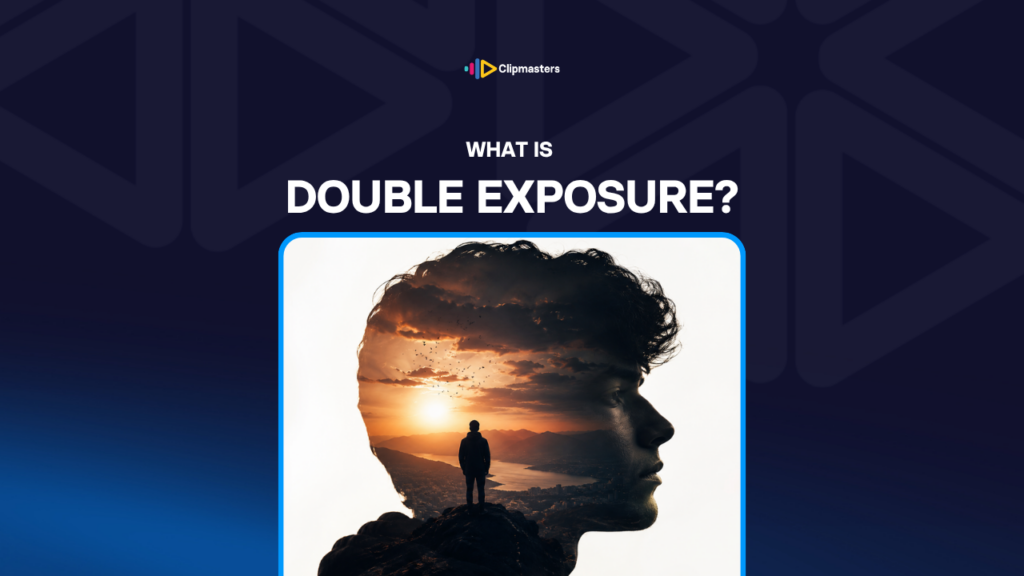
Double exposure is one of the oldest tricks in photography and film. It blends two separate images into one, so you see both at the same time.
On old film, this meant exposing the same piece of film twice. You took one photo, but you did not advance the film. Then you took a second photo over the same frame. The result was both images laid on top of each other.
Today, with digital photos and video, we do this with software instead of film. You stack two images as layers and let the software blend them. The look is similar, but you have far more control.
You can get a double exposure in two ways:
When people say “double exposure” today, they usually mean the deliberate, creative kind, especially in photography. In video, the same blending idea creates composite effects, transitions, and motion-graphics overlays.
Double exposure has a few distinctive looks.
For commercial and online video, double exposure shows up most in title sequences, transitions, and emotional moments. It is a heavy, stylish effect, so using it now and then works better than using it constantly.
In modern editing software, you create double exposure by stacking layers and blending them.
The classic still-photo version takes seconds to copy digitally. The video version takes a bit more setup, but it works the same way underneath.
For commercial work, you will see double exposure in title sequences, brand films, music videos, and emotional storytelling. Tools like After Effects, Premiere Pro, and DaVinci Resolve all handle the blending and masking you need.
You will find double exposure across a lot of visual work.
In about a hundred years, this went from an expensive, specialist effect to a one-tap filter on a phone. The idea is the same, but who can use it has changed a lot.
Double exposure lands hardest when you save it for the right moment. A good editor treats it as a tool with a purpose, like a transition that links two ideas or a moment in a brand film where two things need to feel inseparable. At Clipmasters, your editor reaches for it because the moment calls for it, not just because it is there, which is what keeps these shots from feeling overworked.
On film, you expose the same piece of film twice without advancing it between shots. On digital, you layer two images and blend them with software. Either way, you end up with a single image where both source images show at the same time, giving that layered, see-through look.
Yes. Most modern phones have a built-in double-exposure feature, sometimes called "Multiple Exposure" or "Double Take." Apps like VSCO, Snapseed, and Procreate handle it too. The look is a lot like film double exposure, but you get more control over the blending and the cleanup.
Use it when you want to combine two visuals into one image with an emotional or symbolic link. Common cases: a portrait blended with a landscape to suggest a person's tie to a place, a title sequence layering a few themes, or a transition between two connected moments. It is a heavy, stylish effect, so using it sparingly works better than using it constantly.
Double exposure is one specific kind of compositing, where two layers blend so both show at once. Compositing is the bigger category of combining visual elements into one image. So every double exposure is a composite, but not every composite is a double exposure. A green screen replacement, for example, is compositing but not double exposure.
Because our eyes do not combine two images at once. We see one thing at a time. Double exposure breaks that expectation, so the brain reads it as unreal or dreamlike. That is exactly why it shows up so often in poetry, music videos, and emotional advertising.