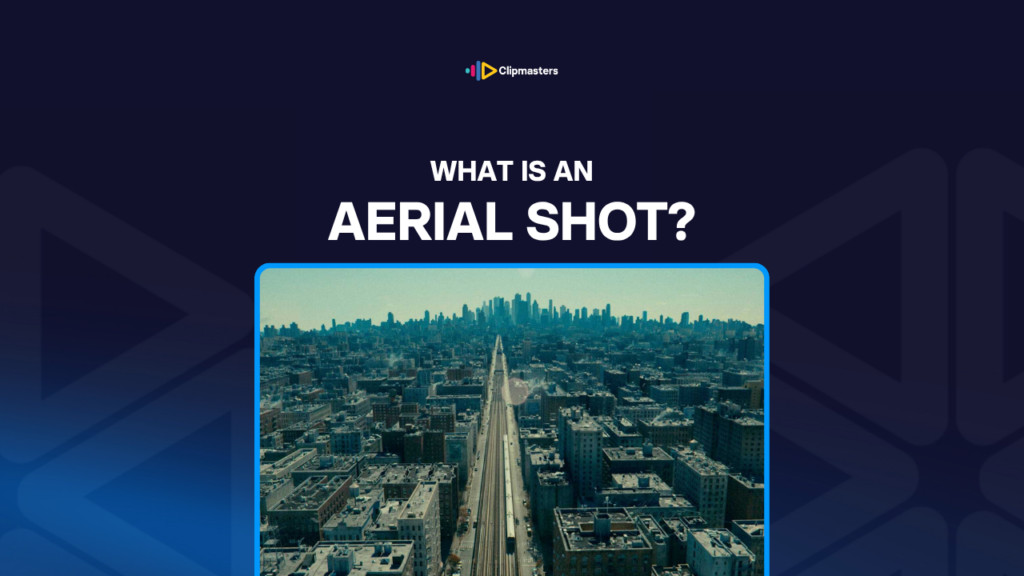
What is an Aerial Shot?

An aerial shot is footage captured from above by a drone, helicopter, plane, or other platform, giving a view impossible from the ground.

In this article

Related Terms

Start Video editing now

What is an Aerial Shot?

An aerial shot is footage captured from above. It gives you a view that you can’t get from the ground. Aerial shots come from drones (the most common today), helicopters, planes, and other platforms. The thing they all share is a real height above the subject.

Here are the main types:

  • Drone shots. The most common form of aerial footage now. Consumer and prosumer drones produce broadcast-quality footage that most productions can afford.
  • Helicopter shots. Used for premium work, bigger scenes, or when drones aren’t allowed. They fly higher, move faster, and sit on a steadier platform.
  • Plane shots. Very high-altitude footage. Common for landscape, weather, and geographic content.
  • Cable cam shots. Cameras hung from cables that move across a space. Common for sports and events.
  • Crane shots. Cameras on cranes give moderate height. Smaller in scale than a true aerial.
  • Tower shots. Cameras mounted on tall towers or platforms.

Here is where aerial shots show up:

  • Establishing shots. An aerial view sets the location and context fast.
  • Travel and tourism. Aerial coverage of destinations.
  • Real estate. A property shown with an aerial view of what surrounds it.
  • Sports. Aerial coverage of fields, courses, and venues.
  • Landscape and nature. Wide natural settings from above.
  • Cities. A city from above shows its layout and architecture.
  • Action sequences. Action shown from above to capture the scope.
  • Brand content. Events, activations, and lifestyle imagery from the air.

Drone technology has opened aerial work up to everyone. What once needed an expensive helicopter or a special rig is now within reach of small productions and even solo creators. That’s why aerial content is now everywhere in commercial and editorial work.

For commercial work, aerial shots are common in establishing sequences, lifestyle brands, automotive, real estate, travel, and anything where scope or location matters.

Need editors who handle aerial and drone footage skillfully?

Editors matched to your brand. Turnaround in as little as 24 hours.

Why aerial shots matter

Here are a few reasons aerial shots earn their place.

Scope. Aerial shots show scale that the ground can’t. A wide landscape, a big event, or a sprawling city all benefit from a view from above.

Location. An aerial establishing shot quickly shows where the action takes place. The geography is clear from up there.

Production value. A well-made aerial shot signals investment. Even with affordable drones, doing it well reads as professional.

Variety. An aerial view looks very different from ground-level footage. That change keeps the audience engaged.

Cinematic feel. Aerial shots feel cinematic and lift the quality of commercial and editorial work.

Geography. Layouts, locations, and how places relate to each other read best from above. Aerial shots give you that.

Mood. An aerial shot can set a mood. A sweeping landscape feels peaceful, a busy city from above feels exciting, and slow aerial movement feels thoughtful.

Brand identity. Many brands build aerial imagery into their look. Adventure, automotive, and lifestyle brands often feature it.

Standing out. A brand that uses aerial content stands apart from competitors who stick to ground-level footage.

Audience expectations. Viewers increasingly expect aerial footage in premium work. Without it, the content can feel like it’s missing something.

For commercial work, aerial shots are now common across most genres. Even small productions can include drone footage. High-end ones often use several aerial platforms.

For documentary and journalism, aerial shots give context and scope. News coverage of events often includes them.

How aerial shots are used in editing

Here is how aerial shots tend to work in the edit.

Open with them. Start a scene or sequence with an aerial shot to set the location and context.

Vary the pace. Aerial shots usually move slowly. Mixing them with ground-level footage gives you a change of pace.

Give them time. Aerial shots work better when they hold a little longer than usual. The wide view takes time to take in.

Match the audio. Sweeping music, ambient sound, and voiceover all work over aerial footage. The sound should match the scale of what we see.

Grade them separately. Drone footage can have different color than the rest of your footage. Color grade it so everything matches.

Stabilize if needed. Drone footage is usually steady, but wind or operator error can cause shake. Stabilization tools in your editing software help.

Cut in and out smoothly. A hard cut between aerial and ground-level can feel jarring. A transition like a cut on motion, an audio bridge, or a fade often feels better.

Use several aerial angles. Mixing high overhead, low aerial, and tracking shots gives variety even within your aerial coverage.

Keep the geography honest. Aerial shots often show how places relate to each other. Keep those relationships accurate, whether to the real location or the story.

Don’t overuse them. A generic drone establishing shot is a cliché now. Use aerial shots for a reason, not as decoration.

In most commercial work, aerial shots fit into the wider coverage. A strong production plans them in pre-production instead of treating them as an afterthought.

Common aerial shot mistakes

Here are the patterns that cause trouble.

Generic drone opens. A drone establishing shot at the start of every video. It’s a cliché. Use it for a reason.

Shaky footage. Drone footage that wobbles, drifts, or shakes. Modern drones are steady, but operator error or rough conditions can still cause shake. Stabilize it in post or reshoot.

Wrong height. Too high and everything looks tiny. Too low and you lose the aerial feel. The right height depends on the subject and what you want.

Weak composition. An aerial shot still needs a good frame. The rules of composition apply even from above.

No ground-level coverage. All-aerial content feels distant. Mix in ground-level shots so the audience connects.

Wrong subject. A talking head from above feels off. Aerial works for environments, landscapes, and action, not for intimate content.

Ignoring the rules. Drone flying is regulated in most places. There are restrictions, registration rules, and permissions to check. Make sure you’re compliant before you shoot.

Battery worries. Drone batteries don’t last long. Plan your shoot around their capacity so you don’t run out at a key moment.

Inexperienced pilots. Flying a drone takes skill. A beginner produces uneven footage. For important content, work with an experienced drone pilot.

Bad weather. Wind, rain, and extreme conditions affect how a drone flies. Plan your shoot around good weather.

Wrong settings. Drone footage shot at the wrong frame rate, resolution, or color profile won’t match the rest of your footage. Set the drone to match the project’s specs.

For commercial work, using aerial shots with discipline is part of good camera work. Used well, aerial footage adds production value. Used poorly, it’s generic or unusable.

How Clipmasters Uses This

Affordable drones have put aerial footage within reach of almost everyone, which is great when it serves the content and tired when every video opens with the same drone shot. A good editor treats aerial as one tool among many, using it for scope, establishing a place, or mood, and staying on the ground when intimacy or detail matters. At Clipmasters, your brand-matched editor makes that call as part of the edit, so the aerial footage you have actually lands where it counts.

Frequently asked questions

Do I need a license to use drone footage?

For commercial drone work, yes, in most places. In the US, the FAA requires Part 107 certification for commercial flying. Other countries have similar rules. Flying as a hobbyist usually has lighter rules. Check what your area requires before a commercial drone shoot.

What's the difference between an aerial shot and a high angle shot?

Every aerial shot is a high angle shot, since it's from above, but not every high angle shot is aerial. A high angle can be just a few feet above eye level. Aerial means real height, like drone, helicopter, or plane height. So aerial is a high angle taken much higher up.

How do I get smooth aerial footage?

Use a steady drone, since modern consumer drones are generally good. Fly when the wind is low. Make smooth, gentle control inputs and avoid sudden moves. The drone's built-in stabilization helps too. For premium work, use a higher-end drone with better stabilization and a good gimbal.

What's a good drone for commercial work?

DJI's prosumer drones, like the Mavic 3 and Air 3, produce broadcast-quality 4K footage. The higher-end Inspire series suits premium work. Brands and creators who shoot a lot of aerial content invest in professional drones with better cameras, range, and stability. Entry-level drones are fine for casual content but may fall short of commercial standards.

Should every commercial have aerial footage?

No. Aerial works for content that benefits from scope, a sense of place, or a view from above. Talking heads, intimate brand content, and simple product shots usually don't need it. Use aerial where it adds value, and skip it where it doesn't.

Loading video…