Dolly Shot

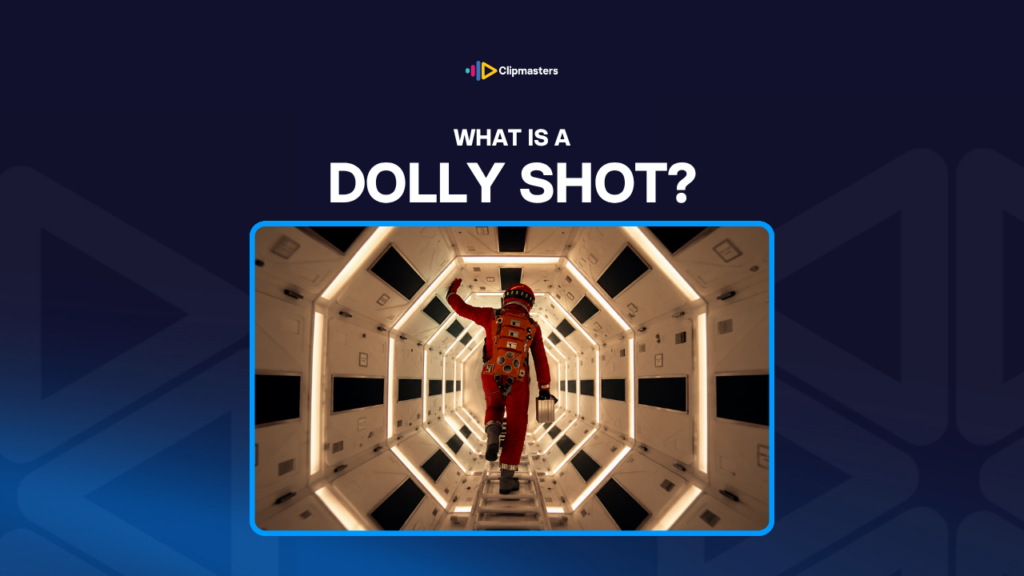
A dolly shot moves the camera physically toward or away from the subject, usually on a wheeled dolly or a track, not by zooming.

In this article

Related Terms

Start Video editing now

What is a Dolly Shot?

A dolly shot moves the camera through space, usually toward or away from the subject. The camera might sit on a wheeled dolly (a small platform with wheels), a dolly track (rails the dolly rolls along), a slider (a short track for smaller moves), or a gimbal that lets someone do dolly-style movement by hand.

The thing that defines a dolly shot isn’t the gear. It’s the camera physically moving through space.

A few camera moves often get mixed up with dollying:

Zoom. The lens changes focal length while the camera stays still. The image looks like it’s getting closer or farther, but the camera doesn’t actually move. Zooming and dollying look similar at a glance but create very different effects.

Tracking shot. The camera moves sideways (left, right, or alongside a subject). It’s sometimes called a “dolly” if it’s done on dolly gear, but the move is sideways rather than toward or away.

Crane shot. The camera moves up or down. Sometimes called a “boom” or “jib.”

Dolly zoom (the Vertigo effect). The camera moves one way while the lens zooms the opposite way. It creates a disorienting effect where the subject stays the same size but the background warps. Made famous by Hitchcock’s Vertigo (1958).

The main types of dolly shot:

  • Dolly in (push-in). The camera moves toward the subject.
  • Dolly out (pull-out). The camera moves away from the subject.
  • Side dolly. The camera moves sideways.
  • Slow dolly. A gradual, almost invisible move that slowly changes the framing over a long take.
  • Whip dolly. A fast, aggressive move.

Need editors who handle dynamic camera moves on every project?

Editors matched to your brand. Turnaround in as little as 24 hours.

What dolly shots do visually

A dolly shot doesn’t just change the size of the subject in the frame. It changes the whole relationship between the subject and the background.

Parallax shift. As the camera moves through space, things in the foreground shift position against things in the background. Your brain reads this as real depth, because the eye is actually moving through a three-dimensional space, not just changing focal length.

Compression and expansion. A dolly-in makes the background appear to spread out behind the subject. A dolly-out makes the background pull in around them. These changes feel different from a zoom, which doesn’t touch the spatial relationships at all.

A sense of presence. A dolly shot makes the viewer feel like they’re physically walking toward or away from the subject. That feeling of moving through space is what gives dolly shots their distinctive cinematic look.

Emotional weight. A slow dolly-in on a character’s face during an emotional beat pulls the audience closer. A pull-out from an intimate scene can suggest isolation, an ending, or a shift in perspective.

Reveal and discovery. A dolly shot can reveal new information as the camera moves. A push-in shows a detail you couldn’t see before. A pull-out reveals the wider context.

Establishing scale. A dolly from a close-up to a wide shot, or the reverse, can show how a subject relates to their surroundings.

Compare all of this to a zoom: a zoom just makes the image bigger without changing any of the spatial relationships. Dolly shots feel “real” because they mimic actual movement. Zoom shots can feel artificial because they don’t match how our own vision works.

Dolly shot vs zoom: the key difference

This is one of the most important distinctions in camera work. A dolly shot and a zoom both bring the subject closer to the viewer (or push it away), but they look different.

Dolly shot: The camera physically moves through space. Foreground and background shift against each other (parallax). The subject grows in the frame because the camera is genuinely closer. The image feels like real movement through space.

Zoom shot: The camera doesn’t move. The lens changes focal length. Foreground and background scale together, so there’s no parallax. The subject grows because the lens is magnifying it. The image feels like it’s flattening or unflattening rather than moving.

The classic demonstration of the difference is the “dolly zoom,” or Vertigo effect: dollying the camera one way while zooming the lens the opposite way at the same time. The subject stays the same size in the frame, but the background warps, because the camera is physically moving while the lens is changing focal length. The result is one of the most distinctive effects in cinema, used to convey disorientation, dread, or unease.

In practice:

  • For natural cinematic movement, use a dolly. The image feels like real motion, and the viewer doesn’t notice anything unusual.
  • For impossible or stylised effects, use a zoom. The flattening look of a long-lens zoom can be a deliberate creative choice, especially in ’70s-era films where the zoom became a signature style.
  • For the Vertigo effect, use both together.

For everyday video work, dolly shots look more polished than zoom shots. The exception is documentary or news work, where a long lens with a zoom is often the only practical option. You can’t dolly through a crowd at a live event.

How dolly shots are done in 2026

The gear for dolly shots has changed a lot since the early days of cinema.

Traditional dolly. A small wheeled platform that the camera sits on, pushed by a dolly grip. The most stable option for big cinema productions. Used with dolly tracks for predictable, repeatable moves.

Dolly track. Rails that the dolly rolls along. They allow perfectly smooth straight-line moves and are standard on most feature film sets.

Slider. A short rail, usually 1 to 4 feet, that lets the camera glide smoothly across a small range. The compact, affordable cousin of a dolly track. Standard gear for commercial and online video.

Gimbal. A motorised stabiliser that allows handheld dolly-style movement. The operator walks toward or away from the subject while the gimbal keeps the camera steady. This was a huge shift from the traditional dolly era, because it removed the need for tracks and dedicated dolly grips. Standard gear for run-and-gun work.

Drone. Drones can do dolly-style moves through space, especially for exterior shots. The physics are different from a ground-based dolly, since the drone can fly any direction, but the visual effect is similar.

Vehicle mounts. Cars, motorcycles, bikes, anything that moves. Mount the camera on a moving vehicle and it becomes a dolly. Used a lot in chase sequences and travel footage.

For commercial and online video, the slider is the most common dolly tool. A $200 to $500 slider produces clean dolly-style moves with very little setup. For run-and-gun work, a gimbal handles dolly-style movement on the fly. For high-end production, traditional dollies and motion-control rigs give the most precision.

The look of dolly shots has changed less than the gear has. The core effect, a camera moving physically through space with parallax shifting the background, is the same whether the camera is on a $200 slider or a $50,000 motion-control rig.

How Clipmasters Uses This

The choice between a dolly shot and a zoom is a small cinematography decision with an outsized effect on how polished a video feels. Most viewers can’t say why one shot reads as more cinematic than another, but the cumulative difference across a whole video is clear. A good editor knows the look they’re working with and cuts to lean on the footage with real camera movement, since thoughtful moves read as professional while zooms in their place can read as quick or amateur.

Frequently asked questions

What's the difference between a dolly shot and a zoom?

A dolly shot moves the camera physically through space. A zoom changes the lens focal length without moving the camera. Both make the subject look closer or farther, but they look different. Dolly shots have parallax, where the foreground and background shift against each other. Zooms don't. Dollies feel like real movement. Zooms feel like flattening or magnification.

What's a slider?

A slider is a short rail, 1 to 4 feet, that lets the camera glide smoothly across a small range. It's the compact, affordable cousin of a full dolly track. Standard gear for commercial and online video, where space and budget don't allow for a full dolly setup. A $200 to $500 slider produces clean dolly-style moves with very little setup.

Can I do a dolly shot on a phone?

Yes, with the right setup. A gimbal stabiliser (like a DJI Osmo or Insta360 Flow) lets a phone produce smooth dolly-style movement when you walk toward or away from the subject. The built-in stabilisation on modern phones helps too. For many everyday uses, the result holds up well against a low-end dedicated dolly.

What's a "dolly zoom" or "Vertigo effect"?

A dolly zoom is when the camera physically dollies one way (in or out) while the lens zooms the opposite way at the same time. The subject stays the same size in the frame, but the background warps, because the camera is moving while the lens is changing focal length. The result is one of the most distinctive effects in cinema, used to convey disorientation, dread, or unease. Made famous by Hitchcock's Vertigo (1958).

Are dolly shots only used in feature film?

No. Dolly-style movement shows up in commercial work, music videos, documentaries, YouTube content, and almost any video where producers want a polished cinematic feel. The gear is much cheaper than it used to be (a basic slider is around $200, a gimbal is $200 to $500), so dolly-style movement is within reach for most modern video work.

Loading video…