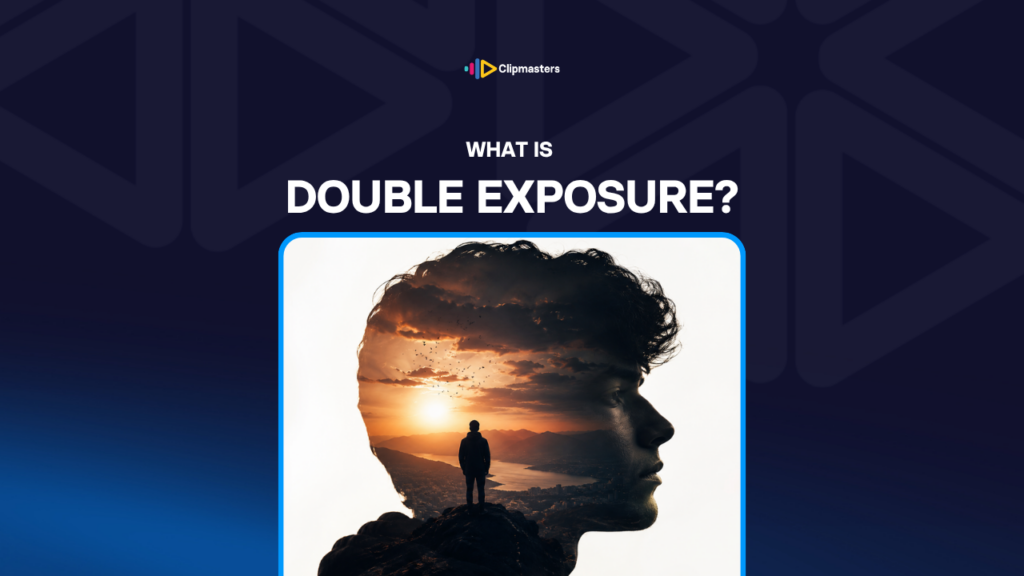
Double Exposure

Double exposure blends two separate images into one, either by exposing the same piece of film twice or by combining layers in software.

In this article

Related Terms

Start Video editing now

What is Double Exposure?

Double exposure is one of the oldest tricks in photography and film. It blends two separate images into one, so you see both at the same time.

On old film, this meant exposing the same piece of film twice. You took one photo, but you did not advance the film. Then you took a second photo over the same frame. The result was both images laid on top of each other.

Today, with digital photos and video, we do this with software instead of film. You stack two images as layers and let the software blend them. The look is similar, but you have far more control.

You can get a double exposure in two ways:

  • By accident. Early photographers sometimes forgot to advance the film between shots. These were usually thrown out as mistakes.
  • On purpose. Photographers and filmmakers learned to use it as a creative tool. Combining a portrait with a landscape, layering a city over a face, blending two moments into one: these all became real techniques.

When people say “double exposure” today, they usually mean the deliberate, creative kind, especially in photography. In video, the same blending idea creates composite effects, transitions, and motion-graphics overlays.

Need editors who handle creative compositing on every project?

Editors matched to your brand. Turnaround in as little as 24 hours.

How double exposure works visually

Double exposure has a few distinctive looks.

  • A see-through overlay. Both images show at once, and neither is fully solid. Your eye reads both together, which gives it a layered, often dreamy feel.
  • Light and dark playing together. Where the two images are similar in brightness, they blend smoothly. Where one is brighter, it tends to win that spot. Bright areas of one image can shine through the dark areas of the other.
  • Using empty space as a canvas. A common trick is a portrait silhouette, a bright subject against a dark background, with a second image filling the bright shape. The dark parts stay dark, and the bright shape becomes the canvas for the second image.
  • Stillness and motion together. In video, you can blend a still element with moving footage. The moving footage seems to flow inside a still shape.
  • An emotional pull. Blending two images often hints at a connection: a person and their thoughts, a place and its past, an action and what it leads to. That is why you see it so much in poetry, music videos, and emotional ads.
  • A dreamlike feel. Real eyes do not combine two images at once, so a double exposure feels a little unreal. Many people lean into that to create a dreamy or surreal mood.

For commercial and online video, double exposure shows up most in title sequences, transitions, and emotional moments. It is a heavy, stylish effect, so using it now and then works better than using it constantly.

Double exposure in digital editing

In modern editing software, you create double exposure by stacking layers and blending them.

  • Working in layers. You place two video clips on separate layers in the timeline. Then you change the top layer’s blend mode from “normal” to one that mixes the two together, usually Screen, Lighten, Overlay, or Soft Light.
  • Choosing a blend mode. Each blend mode gives a slightly different look. Screen brightens, so the brighter image wins. Multiply darkens, so the darker image wins. Overlay does a bit of both. Soft Light blends more gently. Different footage with different blend modes gives different results.
  • Cleaning it up with masks. Often the basic blend needs tidying. A mask can keep the effect in just one part of the frame. Soft-edged masks blend smoothly, and hard-edged masks make a sharp line between the two layers.
  • Adjusting the colour. Double exposure often looks better if you fade or shift the colour of one or both layers. Two full-colour images stacked together can look muddy, so toning one down usually looks cleaner.
  • Adding motion. In video, you can animate each layer on its own. A still portrait can have water flowing inside its shape, or a moving city can flow inside the still outline of a person walking.

The classic still-photo version takes seconds to copy digitally. The video version takes a bit more setup, but it works the same way underneath.

For commercial work, you will see double exposure in title sequences, brand films, music videos, and emotional storytelling. Tools like After Effects, Premiere Pro, and DaVinci Resolve all handle the blending and masking you need.

Where double exposure shows up today

You will find double exposure across a lot of visual work.

  • Photography. Still photos have a long history of double-exposure portraits, like a silhouette blended with a landscape, or a city layered over a face. Many phones now have a “double exposure” mode that does this right in the camera.
  • Music videos. Used heavily here, with blended transitions, performers layered over footage of cities, and abstract emotional sequences. The genre likes to experiment, so it fits.
  • Commercial and brand work. Common in luxury, fashion, beauty, and emotional storytelling. It signals “premium” and “thoughtful” rather than direct and salesy. You see it a lot in brand films for fashion houses, perfume, and lifestyle brands.
  • Title sequences. Many film and TV titles use double exposure to introduce themes and characters. The James Bond title sequences are the most famous example.
  • Documentary. Sometimes used in historical or memoir-style films, often blending footage of the present with images of the past.
  • Social media trends. Double-exposure portraits and short videos pop up again and again on Instagram and TikTok. Apps like VSCO and Snapseed, plus built-in iPhone Photos features, make it easy.
  • Motion graphics. The same blending modes are everyday tools here. Almost every motion graphic uses some layer blending, even when it does not look like a classic double exposure.

In about a hundred years, this went from an expensive, specialist effect to a one-tap filter on a phone. The idea is the same, but who can use it has changed a lot.

How Clipmasters Uses This

Double exposure lands hardest when you save it for the right moment. A good editor treats it as a tool with a purpose, like a transition that links two ideas or a moment in a brand film where two things need to feel inseparable. At Clipmasters, your editor reaches for it because the moment calls for it, not just because it is there, which is what keeps these shots from feeling overworked.

Frequently asked questions

How does double exposure work?

On film, you expose the same piece of film twice without advancing it between shots. On digital, you layer two images and blend them with software. Either way, you end up with a single image where both source images show at the same time, giving that layered, see-through look.

Can I do double exposure on a phone?

Yes. Most modern phones have a built-in double-exposure feature, sometimes called "Multiple Exposure" or "Double Take." Apps like VSCO, Snapseed, and Procreate handle it too. The look is a lot like film double exposure, but you get more control over the blending and the cleanup.

When should I use double exposure?

Use it when you want to combine two visuals into one image with an emotional or symbolic link. Common cases: a portrait blended with a landscape to suggest a person's tie to a place, a title sequence layering a few themes, or a transition between two connected moments. It is a heavy, stylish effect, so using it sparingly works better than using it constantly.

What's the difference between double exposure and compositing?

Double exposure is one specific kind of compositing, where two layers blend so both show at once. Compositing is the bigger category of combining visual elements into one image. So every double exposure is a composite, but not every composite is a double exposure. A green screen replacement, for example, is compositing but not double exposure.

Why does double exposure look "dreamy"?

Because our eyes do not combine two images at once. We see one thing at a time. Double exposure breaks that expectation, so the brain reads it as unreal or dreamlike. That is exactly why it shows up so often in poetry, music videos, and emotional advertising.

Loading video…