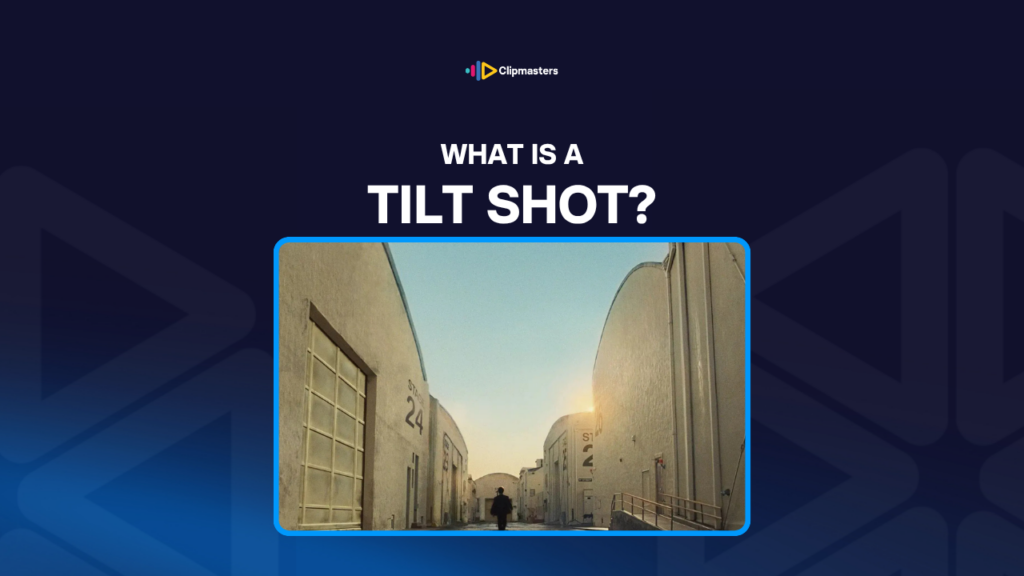
A tilt shot swings the camera up or down on its mount. The camera stays in one place, but the lens rotates from looking down to looking up, or the other way around. On screen, it feels like the camera is “looking up” or “looking down” through the shot.
Tilt is different from other up-and-down camera moves:
Common ways tilt shots get used:
What tilt shots are like:
For commercial work, tilt shots are common in establishing shots, architecture, and reveals. The move is simple, but it works well for those specific jobs.
Here are the main reasons tilt shots are useful.
Reveals. A tilt-up builds anticipation. The audience watches the move, wondering what they will see at the top.
Scale. Tilting from the ground to the top of something tall shows how big it is. The length of the tilt suggests the height.
Visual interest. A static shot can feel dead. A tilt adds motion that holds the eye.
Following vertical action. Action that moves up or down, like someone climbing or a rocket launching, is best captured with a tilt.
A sign of care. A smooth, considered tilt reads as professional. A plain static shot feels less crafted.
A fit for tall subjects. Buildings, monuments, and tall structures suit tilt coverage, because the vertical move matches the vertical subject.
Controlling the reveal. How long the tilt takes controls how much time people have to take in what they see. A slow tilt lingers. A fast one adds energy.
Mixing with other moves. Tilt combined with a pan, a dolly, or a zoom builds more complex motion for specific effects.
Easy to pull off. Tilt is one of the simpler moves. Even a tight budget can get a clean tilt with a basic tripod head.
Flexible. It works for a lot of situations: establishing shots, character reveals, architecture, action.
For commercial work, tilt shots are standard cinematography. Nearly every project uses some tilt. The move is common and well understood.
Here is how tilt shots come together in practice.
Know what the tilt is for. Each tilt should do something specific: reveal, show scale, follow action. Decide that before you shoot.
Choose your start and end frames. What do you see at the start? What about the end? Both should be framed with care.
Control the speed. A slow tilt feels thoughtful. A fast one feels energetic. Match the speed to the content.
Use a fluid head tripod. Fluid heads make for smooth tilts. Cheap heads tend to jerk.
Plan the length. The tilt’s length affects pacing. Short tilts of two to three seconds for quick reveals. Long tilts of five to ten seconds for slow, dramatic moments.
Frame both ends carefully. The start and the end are both real frames. Compose each one on purpose.
Add focus changes if needed. Some tilts shift focus during the move, with the operator adjusting as the tilt goes.
Time the reveal. When something important comes into frame, that moment matters. The tilt should land it well.
Edit with the whole tilt in mind. Tilt shots usually need their full length. Cutting one short loses the impact.
Back it with audio. Tilt reveals often work with a music swell, a sting, or a sound effect. The audio reinforces the visual.
Do not overdo it. Tilting every shot gets monotonous. Use it where it serves a purpose.
For most commercial work, tilts are part of standard coverage. A strong shoot includes tilt options for moments that benefit from vertical motion.
Here are the patterns that tend to cause tilt trouble.
Jerky motion. Tilts that are not smooth. Cheap heads or shaky hands make for uneven moves. Use a fluid head.
Wrong speed. Too fast and people cannot read what is revealed. Too slow and the energy dies.
Bad framing at the ends. A start or end frame that is not well composed. Both ends should be deliberate.
No payoff. A tilt that does not reveal anything worthwhile. The move exists but does not earn its place.
Cliché use. Tilts in the obvious spots, like rising up the tall building or dropping down to show the scene. It can feel predictable.
Hard cuts in or out. Cutting to or from a tilt with a hard cut that fights the motion. A gentler transition often works better.
Wrong direction. Tilting down when up would serve better, or the reverse. The direction should match the intent.
Mismatched audio. Audio that does not back the tilt. A reveal with no audio emphasis feels flat.
No plan. Just swinging the camera up or down without thinking about the start, the end, or the point. It comes out feeling random.
Too many moves at once. Tilt plus pan plus zoom plus dolly gets confusing. A simpler move often works better.
For commercial work, careful tilt use is part of professional cinematography. Used deliberately, a tilt adds interest and gets a specific job done.
Tilt shots are simple, but using them well takes intent, so a dedicated editor who knows your brand treats each one as a real choice: to reveal, to show scale, or to follow action. AI-assisted tools help us find and place these shots quickly, with simple edits often back in as little as 24 hours. Giving every camera move a purpose is just part of the edit, not something extra to ask for.
Both moves rotate the camera on its axis without changing its position. A tilt rotates up and down. A pan rotates left and right. Both can reveal something or follow action. They just point in different directions.
Yes, but be careful. Handheld tilts can come out uneven. They are steadier on a tripod or stabilizer. If you want a deliberate handheld look, a little unevenness is fine. For polished work, a mounted tilt is usually cleaner.
It depends on how far the tilt travels and what it is for. Short tilts of two to three seconds for quick reveals. Standard tilts of three to five seconds for typical use. Long tilts of five to ten seconds for dramatic or sweeping vertical moves. Match the length to the content.
Yes. A drone can tilt its gimbal-mounted camera up and down while hovering in place. The drone holds steady and the camera tilts. Combined with the drone's own movement, this opens up complex aerial shots that include a tilt.
Use a tilt for reveals or vertical motion when the camera does not need to move. Use a crane for vertical motion when you want the camera's position to change too. A tilt is simpler and cheaper. A crane is more dynamic but needs more gear. The choice comes down to what the shot needs.